
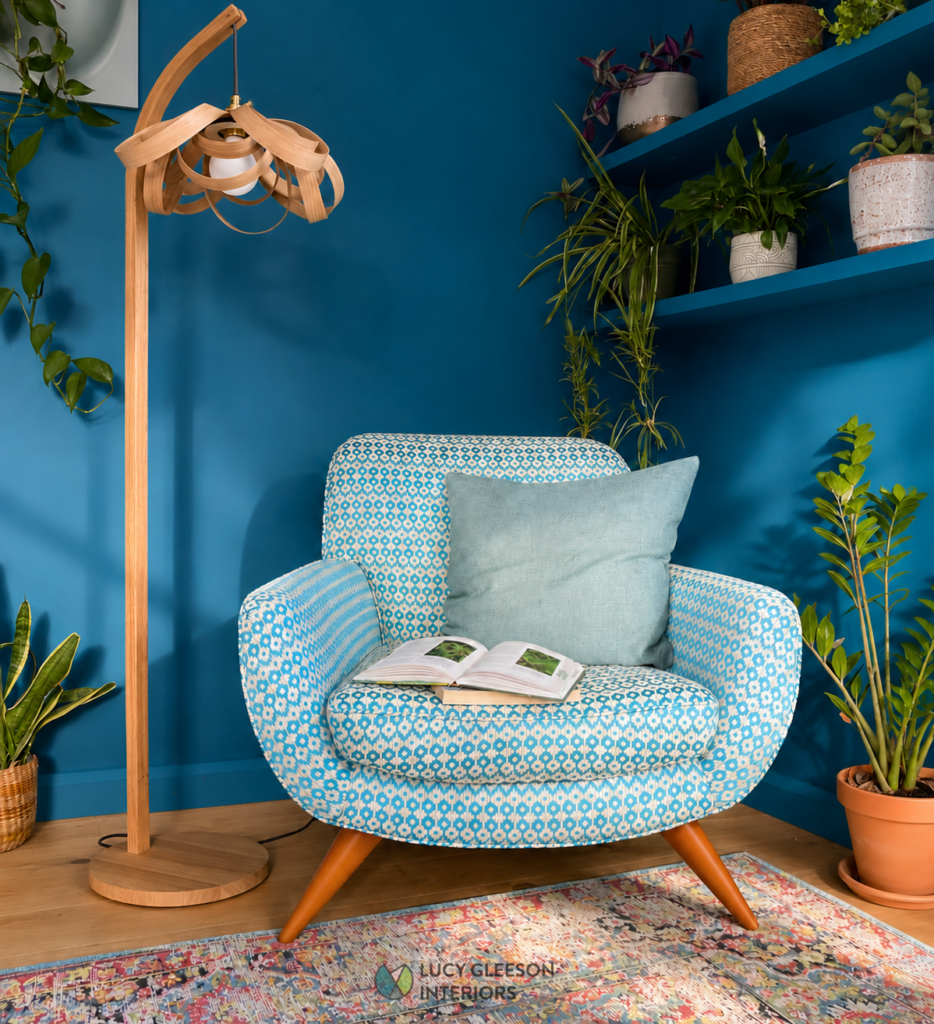
When we think of biophilic design, we often picture homes filled with plants, natural materials and earthy colour palettes. While these elements all clearly help strengthen our connection with nature, there is another important aspect of biophilic design and something we take for granted – natural light.
Light does far more than illuminate a room. It helps regulate our circadian rhythm which as you may know is our body’s natural 24-hour clock and it influences when we feel alert, tired and even affects our mood and overall well – being.
I recently studied to find out more about design and our bodily make up because it is essential in creating homes that feel right. We have lived for thousands of years in harmony with the rising and setting of the sun. Morning light (when we are lucky in the UK ) encourages us to wake and become active, while the gradual fading of the daylight later on, prepares our bodies for resting. Our lifestyles have changed dramatically over time but our biology hasn’t and we still respond to natural patterns, even when we have artificial lighting in the home.
I feel that biophilic design is much more than aesthetics. It’s about creating homes that work with our natural rhythms, rather than against them. When I begin designing a home, one of the first things I observe is the light because it will play a crucial role.
How does it move through the space during the day ? Which room welcomes the morning sun ? Where does the afternoon light create warmth ? Which corners naturally invite moments to take time out ? So may questions but all important.
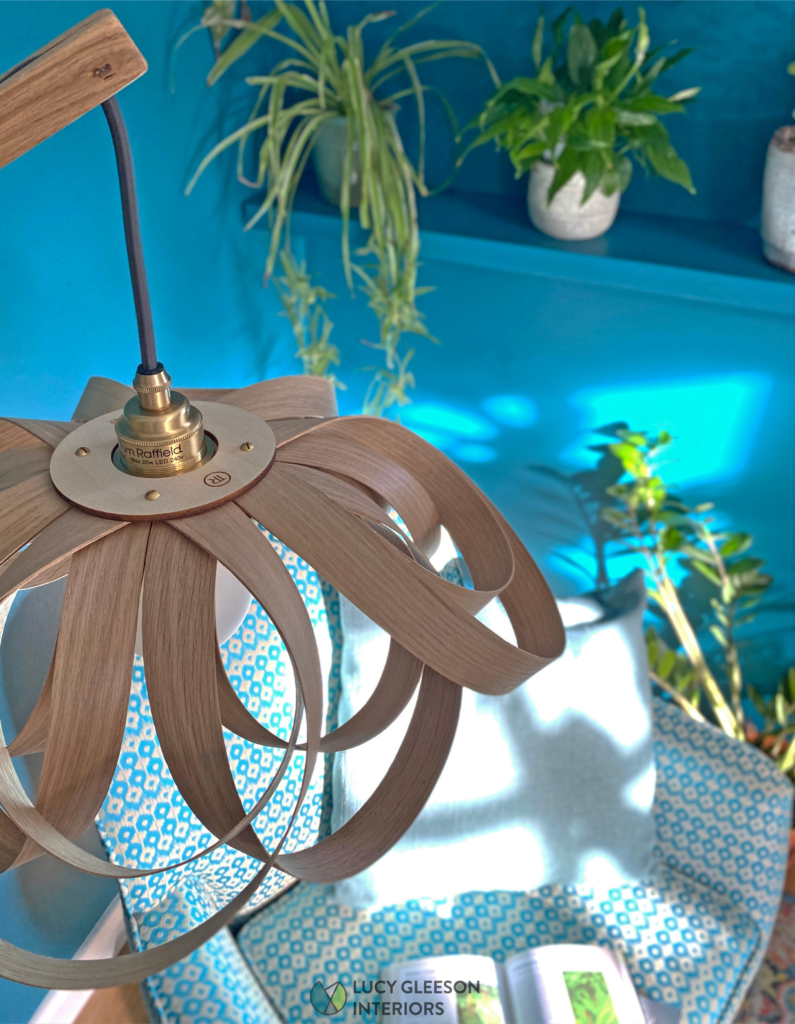
I often find myself returning to the same reading corner in my own home on sunny mornings. As the light moves across the chair and surrounding plants, the whole space feels, well, just different. Our homes are never static and completely change mood over 24 hours. When I switch the lamp on, it then. creates a whole new layer of atmosphere to enjoy.
These observations shape many of my design decisions. Positioning furniture to make the most of daylight, allowing natural light to reach further into a room and layering softer artificial lighting for the evening all help create spaces that feel more comfortable and supportive of everyday life.
Colour plays an equally important role – as both an interior designer and colour therapist, I know that colour is never experienced in isolation. Natural light changes throughout the day, altering the way every shade appears and the atmosphere it creates. A colour that feels fresh and uplifting in the morning may feel warm and cocooning as evening approaches. Due to various hues mixed in one final colour, you will see very different outcomes as the day goes by.
Alongside my interior design work, as mentioned, I also offer colour therapy as a separate service for individuals, exploring the personal relationship we each have with colour and how it can support emotional well – being. Although these are two distinct services that do also intertwine, they share the same philosophy: creating greater harmony between ourselves and the spaces we inhabit.
Interiors are about more than creating beautiful homes. They are about designing spaces that nurture wellbeing by working in harmony with nature. When we understand how light, colour and our circadian rhythms influence the way we feel, we can create homes that don’t just look beautiful, but support the people who live in them.
If you would like to know more about my work here are my design services.
This lamp was received for a previous collaborative instagram post with Tom Raffield.



0 Comments